THE PLAYBOOK · BLCQC
Nonogram: rules and examples
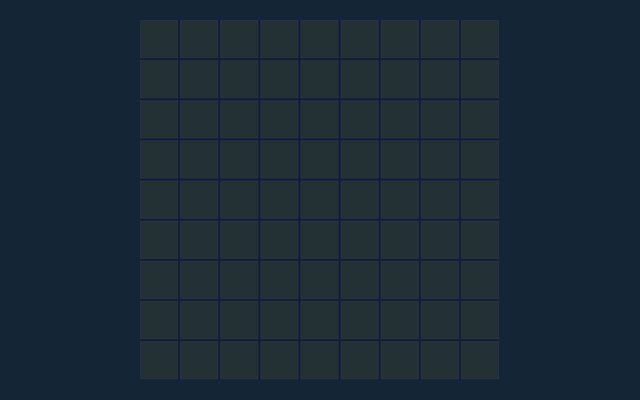
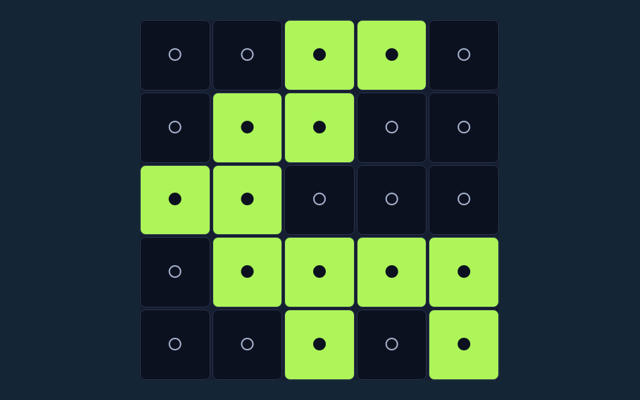
Make Nonogram your next activity in the game library. Shade the grid so every row and column matches its run-length clues. Use the example below to understand a decision. Check the rule that explains your first action. Use the example below to understand a decision.
Work through a collection of twelve 5×5 picture puzzles.
Try a more deliberate round
After a move, check what changed. Decide which rule explains the new state before acting again. Make the next step deliberately.
The challenge in front of you
Shade the grid so every row and column matches its run-length clues. Keep that objective in view throughout the round. Check the rules when you are unsure.
A walkthrough of the rules
- Cycle a square between filled, crossed and blank.
- Keep separate runs apart by at least one blank.
- Combine row and column deductions.
- Check puzzle verifies the finished grid.
Controls
Click or tap squares or graph edges. Number boards include a digit pad. Undo reverses the previous change; Check puzzle validates the solution. Keep the playing area visible while using these controls. Look at the feedback after the action.
An example to follow
Clue 2 1 requires a run of two, a blank separator, and a run of one. Compare this with the rule that governs the move. Check the stated objective.
Notice this detail
Do not merge two separate runs. A different version of the game may use a different rule. Choose one rule to keep in mind for this round. Apply it consistently rather than guessing what another version might allow.
Read these answers for extra help
On this playing page, what is the goal of Nonogram?
Here is the relevant explanation: Shade the grid so every row and column matches its run-length clues.
When I return, how do I control Nonogram?
Here is the relevant explanation: Click or tap squares or graph edges. Number boards include a digit pad. Undo reverses the previous change; Check puzzle validates the solution.
For this browser game, what example helps explain Nonogram?
Clue 2 1 requires a run of two, a blank separator, and a run of one.
What should I watch out for in Nonogram?
Here is the relevant explanation: Do not merge two separate runs.
Before I begin, what format does Nonogram offer?
The key detail is this: Work through a collection of twelve 5×5 picture puzzles.
While learning, which play mode does Nonogram use?
For clarity: The mode on this page is Solo. Same-device play uses one screen; this game library does not provide internet matchmaking.